PD in Practice: Appendix E - Planning tools
Appendix E: Planning tools
There are many tools designed to help planners think critically and carefully about their projects. Each of them has different purposes and different strengths and weaknesses; a tool that is perfect for one scenario might not work in a different context. For example:
- The SMART mnemonic enables us to think through how to plan goals, objectives, or indicators that will pay off when it is time to evaluate success.
- The A–F Framework is an analytical tool to help you think through the component parts and requirements for planning an event or activity.
What all these tools have in common is that they are intended to promote critical thinking and detailed planning. At this stage, you want to be as precise and as concrete as possible when analyzing audiences, planning for audience engagement, allocating resources, and establishing program objectives and indicators.
1. SMART criteria
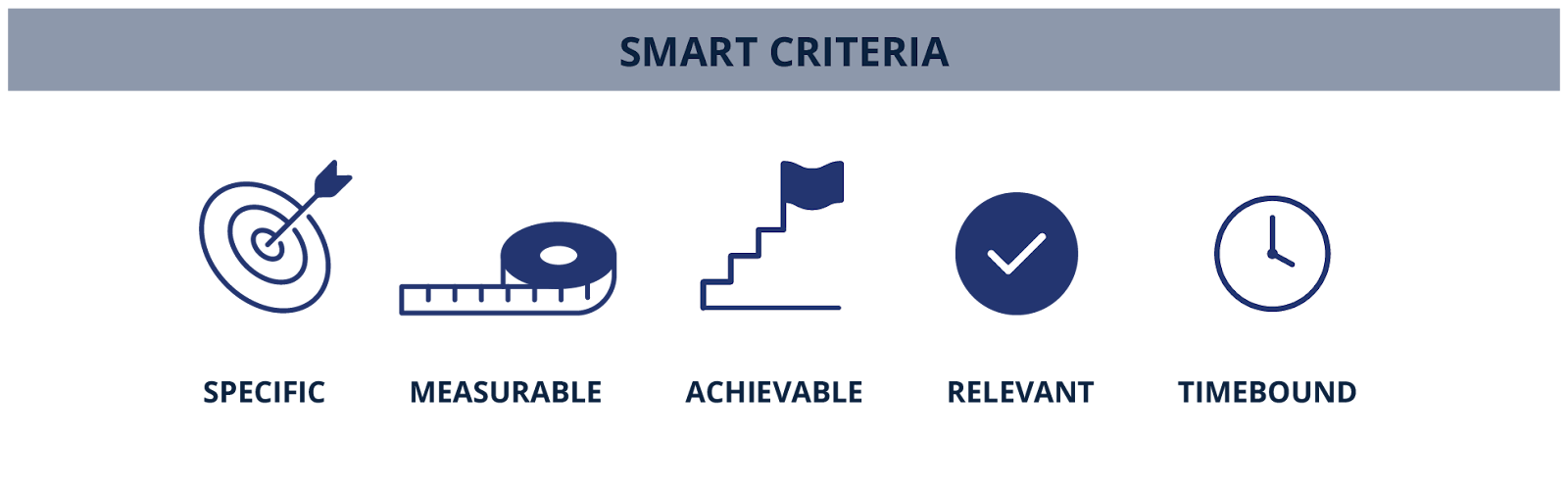
Figure 21. SMART criteria
The mnemonic device “SMART” is often used to describe attributes of goals, objectives, outcomes, and indicators. This planning tool helps you define initiative and activity objectives or indicators that are suitable for monitoring and evaluation. The letters in SMART stand for the following words and concepts.
- Specific. The target should cover only one concept; don’t use objectives that have two purposes or two components because doing so will make it impossible to disentangle the two.
- Measurable. You must have the ability to collect useful data in an effort to monitor the objective.
- Achievable. Targets should be achievable, but ambitious. Finding the balance is something of an art. Targets that are both ambitious and achievable elicit excellent performance.
- Relevant. The objective should be related to the concrete change in conditions you hope to achieve.
- Timebound. There should be a due date. This ensures that everyone is aware of what is required and we are able to hold key stakeholders accountable.
Example of a not-so-SMART objective
Leverage key institutions to improve the image of the United States and to forward U.S. priorities in the area.
What could be better?
- S – This objective identified two different stated objectives (improve image and forward priorities).
- M – What is the objective measuring? How will you know if the United States’ image has been “improved” or if its policies have been “forwarded”?
- A – It’s difficult to know whether this objective is achievable, because the objective contains few concrete factors to measure.
- R – Focus on actions (leverage key institutions) rather than on the result of those actions.
- T – The objective is open-ended: there’s no target date or end date for the initiative.
Example of a SMART-er objective
By the end of 2021, 80 percent of embassy program participants will report that they are either somewhat or very supportive of U.S. policy concerning tariffs in their country.
What’s better about this one?
- S – One topic – public support for a specific U.S. policy
- M – Can collect data on participants’ views through a survey that asks this question
- A – 80 percent is a high goal, but not impossible to achieve
- R – Clearly defined result: “somewhat or very supportive of U.S. policies”
- T – Sets a target date: end of 2021
2. The A–F Framework, or the ABCDEF Framework
This tool is well suited for planning media and social media campaigns, but it can be used also to plan other PD activities. A–F is a mnemonic for “Audiences, Behaviors, Content, Delivery, Engagement, and Follow-up.” It can be used also as a quick planning tool for traditional PD initiatives and activities to help you think through all of the component parts of a program.
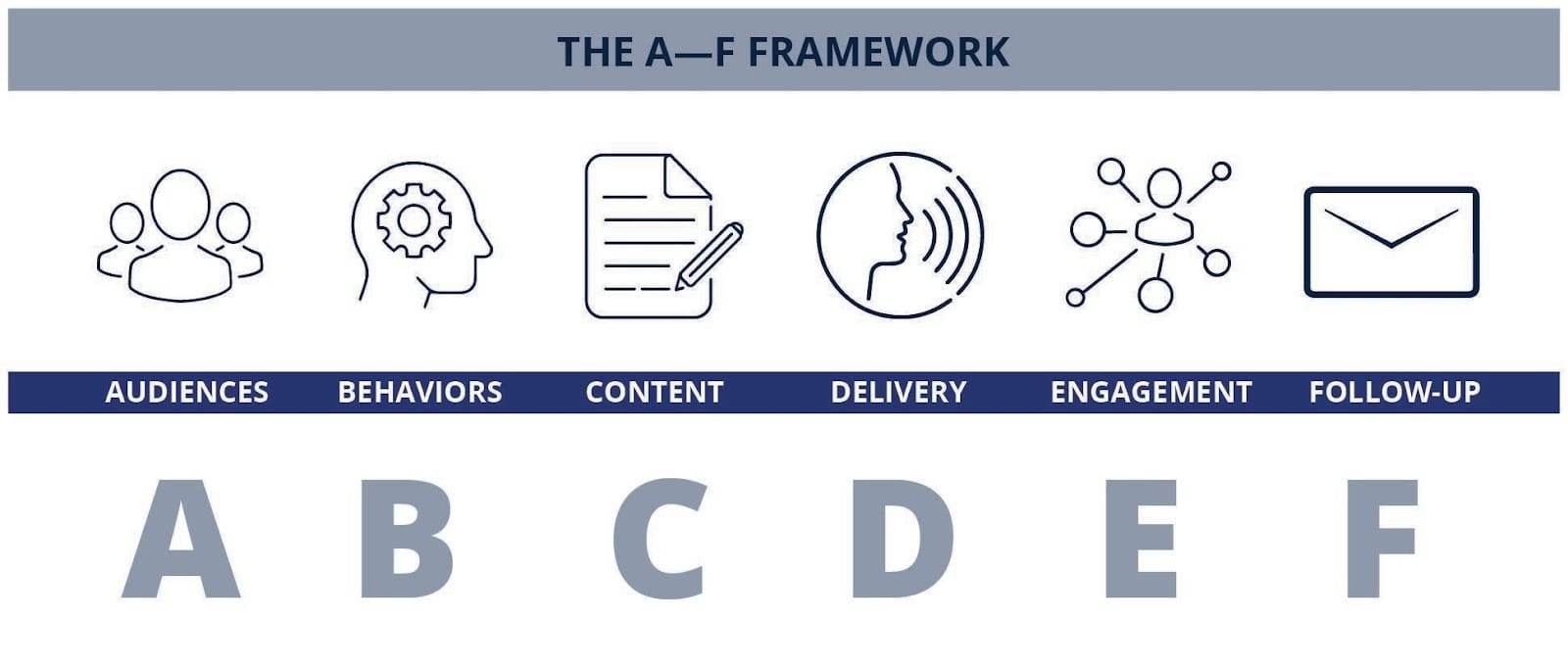
Figure 20. The A–F Framework
- Audiences. Identify which priority audience segments an activity/campaign must reach to accomplish its goals. PD practitioners should conduct audience research to identify specific audience segments that they intend to target in accordance with the audience analysis techniques detailed in Appendix D: Identifying, selecting, and describing audiences.
- Behaviors. Understand actions or attitudes that the segmented audience should adopt as a result of the campaign.
- Content. Consider how to create your own content, curate and use official content produced by Department sources, or curate and use non-official content from public sources to impart messages to audiences and set up opportunities for two-way engagement with them, to elicit the desired behavior from that audience.
- Delivery. Determine how content will be delivered to the identified audience segments, including what kinds of platforms, and which platforms specifically, the identified audience segments use to communicate with one another and exchange information.
- Engagement. Consider how to deliver content in a way that sparks conversations with both your mission or bureau and among priority audiences. This includes using digital and social media to strengthen relationships and outreach with important organizations, individuals, and networks of individuals.
- Follow-up. Identify how you will receive feedback from your priority audience, which you can use to adjust the initiative as needed. Establish a plan to gauge progress and adjust strategies and tactics over time to meet your specific objectives and goals.